
 855-722-2552
Property owners in Florida have a legal duty to keep their premises reasonably safe, and when they fail and someone is hurt, a Florida premises liability lawyer holds them accountable. Premises liability covers far more than slip and fall accidents. Negligent security at apartment complexes and hotels, drownings in unfenced pools, dog attacks, collapsing balconies, and construction site hazards all fall under it. Gordon & Partners has handled these cases across Florida since 1993, and we take on the property owners, management companies, and insurance companies that would rather blame the person who got hurt. No fees unless we win, and no upfront costs.
Call 855-722-2552 or request a free case evaluation online. We represent the injured, not the powerful.




What Is Premises Liability Under Florida Law?
Premises liability is the area of personal injury law that makes property owners and occupiers legally responsible for injuries caused by unsafe conditions on their property. The core idea is a duty of care: whoever controls a property has a legal obligation to keep the premises safe for the people who come onto it, and to warn them about known or hidden dangers that cannot be fixed right away.
That duty applies to nearly every kind of property in Florida: grocery stores and shopping malls, restaurants and bars, hotels and resorts, apartment complexes, office buildings, parking garages, amusement parks, private homes, and government-owned facilities. It applies to the property owner, and often to a tenant, manager, or maintenance contractor who controls the premises.
Premises liability is a form of negligence, but it has its own rules. In an ordinary negligence case you prove the defendant acted carelessly. In a Florida premises liability case you must also prove the property owner knew, or should have known, about the dangerous condition and failed to correct it or warn you. That “notice” requirement is where most of these cases are won or lost, and it is explained below.
Who Is Protected: Invitees, Licensees, and Trespassers
Florida law scales the property owner’s duty to the reason the injured person was on the property. There are three categories:
- Invitees. People invited onto the property for business or public purposes: customers in a store, guests at a hotel, patients at a clinic, visitors to a public park. Invitees are owed the highest duty of care. The property owner must keep the premises safe, conduct routine inspections for hazards, fix known or hidden dangers, and warn of any hazard that cannot be corrected immediately.
- Licensees. People on the property for their own purposes with the owner’s permission, such as social guests in a private home. The owner must warn licensees of known dangers that are not obvious, but does not owe the same duty of routine inspection.
- Trespassers. People with no permission to be on the property. The duty is limited to refraining from intentional or reckless harm. Under Florida Statute 768.075, a property owner is not liable for injuries to a trespasser who was under the influence of alcohol or drugs or was committing a felony on the property, except for intentional misconduct. A narrow exception protects child trespassers drawn to an “attractive nuisance” such as an unfenced pool.
Identifying the injured person’s status is one of the first things a premises liability attorney does, because it determines what the property owner owed them.
Types of Premises Liability Cases Gordon & Partners Handles in Florida
Our Florida premises liability attorneys handle every kind of dangerous-property claim, and several have dedicated teams:
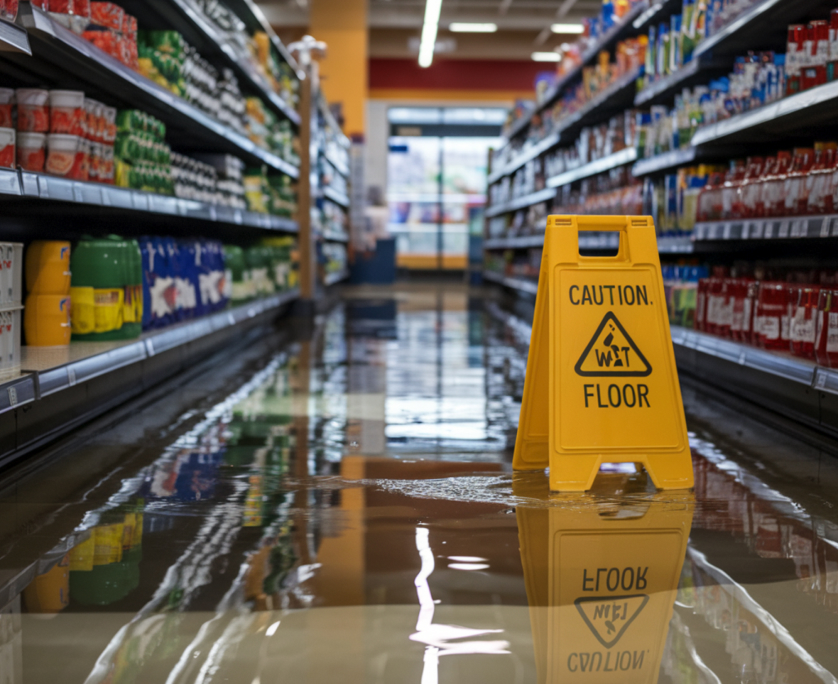
- Slip and fall and trip and fall accidents. Wet floors, spilled products, uneven pavement, torn carpet, and broken stairs. Our slip and fall attorneys handle these cases, which are the most common premises liability cases in Florida.
- Negligent security. Assaults, robberies, and shootings at apartment complexes, hotels, bars, and parking garages where the property owner provided inadequate security. Covered in detail below.
- Swimming pool accidents and drownings. Florida leads the nation in child drownings, and unfenced pools, missing gates, and absent lifeguards at hotels, HOAs, and private homes are frequent causes.
- Dog bites. Florida imposes strict liability on dog owners under Florida Statute 767.04; the owner is held legally responsible whether or not the dog had ever bitten before. Our dog bite lawyer team handles these claims.
- Construction site accidents. Falls, falling objects, and equipment injuries on sites open to the public or involving third-party contractors. See our construction accident attorneys.
- Elevator and escalator accidents.
- Balcony, deck, and structural collapses.
- Inadequate lighting and poor maintenance, including falling merchandise in retail stores.
- Fires and carbon monoxide exposure from code violations.
- Amusement park and recreational facility injuries.
Whatever the hazard, the analysis is the same: who controlled the property, what did they know, and what should they have done about it.
Negligent Security Claims: When Property Owners Fail to Protect Visitors
Negligent security is a premises liability claim against a property owner who failed to take reasonable steps to protect people from foreseeable crime. If you were assaulted, robbed, or shot at an apartment complex, hotel, bar, shopping center, or parking garage, and the owner knew the area had a crime problem but did nothing about it, the owner may be legally responsible alongside the criminal.
These cases turn on foreseeability. Prior crimes on or near the property, police calls, complaints from tenants or guests, and the owner’s own security assessments all show what the property owner knew. Broken gates, burned-out lights, non-functioning cameras, and missing or untrained security personnel show what the owner failed to do.
Florida changed the rules for one category of these cases in 2023. Under Florida Statute 768.0706, an owner or operator of a multifamily residential property with five or more units can claim a presumption against liability for a third-party criminal act if the property has implemented specific security measures by the statutory deadline. Those measures include security cameras at entrances and exits, adequate lighting in parking lots and walkways, one-inch deadbolts on unit doors, peepholes or door viewers, locking windows and sliding doors, and a crime prevention through environmental design (CPTED) assessment. Under Section 768.0701, juries in these cases must also assign a share of fault to the criminal who committed the act.
That presumption does not end the case. It applies only to qualifying multifamily properties, only if every listed measure was actually in place, and it can be overcome with evidence. Hotels, bars, retail centers, parking garages, and smaller residential properties are not covered by the presumption at all. Gordon & Partners investigates whether the owner truly complied and builds the foreseeability record the statute demands. A security company can be sued as well: when a contracted security provider fails to perform its duties, it can share liability with the property owner.
Proving Notice: Actual vs. Constructive Knowledge in Florida Premises Cases
To win a premises liability claim in Florida, you must prove the property owner had notice of the dangerous condition. There are two kinds:
- Actual knowledge. The owner or an employee knew about the hazard: an employee saw the spill, a tenant reported the broken gate, a manager received a complaint about the loose railing.
- Constructive knowledge. The owner should have known. The hazard existed long enough that a reasonable inspection would have found it, or the condition occurred so regularly that it was foreseeable.
For the most common premises liability accident, a fall on a spilled or tracked-in substance in a business, the rule is set by Florida Statute 768.0755. The injured person must prove the business had actual or constructive knowledge of the substance, and constructive knowledge can be shown by circumstantial evidence that the condition existed for a length of time or occurred with regularity. Our slip and fall attorneys explain how that statute works in practice.
Notice is the reason these cases are hard to win without early investigation. Surveillance video showing how long a hazard existed is routinely overwritten within days. Inspection logs, maintenance records, incident reports, and prior complaints are in the property owner’s possession. Gordon & Partners sends preservation demands immediately and, once litigation begins, uses discovery to obtain the records that prove what the owner knew.
How to Prove a Florida Premises Liability Claim
Beyond notice, a valid premises liability claim requires the same four elements as any negligence case: the property owner owed you a legal duty, the owner’s negligence breached it, the breach caused the accident, and you suffered injuries as a result. We build that proof in five steps:
- Seek medical attention right away. Your medical records tie the injury to the accident and establish its severity. Gaps in treatment are the first thing insurance companies point to.
- Report the incident and get a copy. Ask for an incident report from the store, hotel, or property manager, and photograph the hazard before it is cleaned up or repaired.
- Identify witnesses. Other customers, guests, or employees who saw the hazard or the fall.
- Preserve the evidence. We send preservation letters demanding surveillance footage, inspection logs, maintenance records, and prior incident reports.
- Prove negligence with the owner’s own records. In litigation, discovery forces the property owner to produce what it knew and when. That is where most premises liability lawsuits are won.
Premises liability cases are harder to win than a typical car accident, because notice must be proven and because the evidence belongs to the defendant. That is exactly why the early investigation matters.
Compensation Available in Florida Premises Liability Cases
A successful claim can recover:
- Medical bills and medical expenses, past and future
- Lost wages and loss of earning capacity
- Pain and suffering
- Emotional distress, including trauma from violent crime
- Permanent disability and disfigurement
- Loss of enjoyment of life
- Loss of consortium for a spouse
- Wrongful death damages for families, including funeral expenses and loss of support
Premises liability injuries are frequently serious: hip fractures and back and neck injuries from falls, traumatic brain injuries from falls and assaults, spinal cord injuries, and drowning deaths. Our brain injury lawyers handle the most catastrophic injuries. When a death results, surviving family members may bring a wrongful death claim through our wrongful death attorneys.
Two Florida rules affect every recovery. Under Florida Statute 768.81, Florida uses modified comparative negligence: if you are found more than 50% at fault, you recover nothing, and if you are 50% or less at fault, your award is reduced by your percentage. This is the “51% rule,” in effect since March 24, 2023. Property owners and their insurance companies lean on it constantly, arguing the hazard was “open and obvious” or that the injured person was not paying attention. And under Florida Statute 95.11, a premises liability lawsuit must be filed within two years of the injury for claims accruing after March 24, 2023.
No lawyer can promise a specific result. What we can promise is that the initial settlement offer from a property insurer will not account for future medical care or the full impact of the injury. A free consultation is the fastest way to learn what a fair outcome looks like in your case.
Why Choose Gordon & Partners as Your Premises Liability Attorney in Florida
- $1 Billion+ recovered for injured clients since 1993. See our verdicts and settlements.
- 21 attorneys with 200+ years of combined experience, and the resources to fund the investigators and security experts these cases require.
- Offices in Palm Beach Gardens, Plantation, and Stuart, with virtual consultations available anywhere in Florida.
- Plaintiff-only. We have never represented a property owner or insurance company against an injured person.
- Recognition from Super Lawyers, Martindale-Hubbell’s highest rating, and the Million Dollar Advocates Forum.
- No fees unless we win, free consultations 24/7, and Spanish-speaking staff.
Premises liability cases are hard to win because notice must be proven and because evidence disappears quickly. They are winnable when the investigation starts early. If you were hurt on someone else’s property anywhere in Florida, call 855-722-2552 or complete our free case evaluation form to speak with a Florida premises liability lawyer at Gordon & Partners. There is no cost to talk, and no fee unless we win.
- We represent the injured, not the powerful
- No legal fees, unless we win your case
- Over 200 years of combined experience
